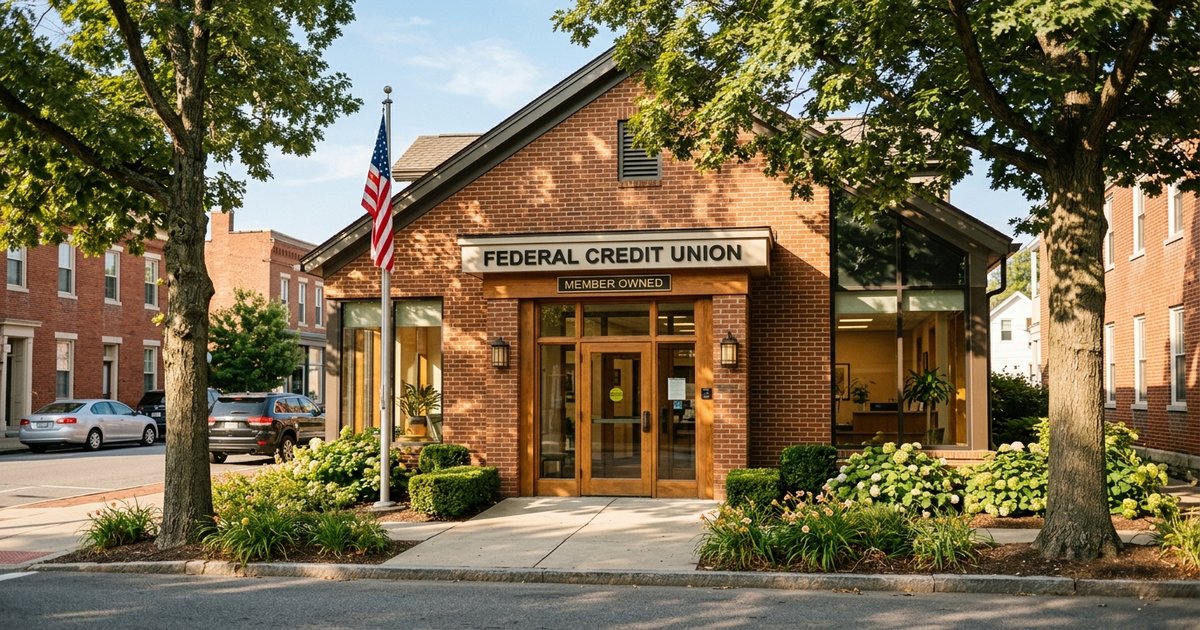



You search "payday loan near me" because that is what you know exists. The storefront with the green sign. The app that promises money in 15 minutes. The one your coworker mentioned. Nobody ever tells you that the same neighborhood probably has a credit union, three miles away, that can lend you the same amount at less than a tenth of the cost. Not because credit unions are hiding. Because nobody is advertising them to you.
This is the explainer I wish I could hand to every borrower I have ever counseled who walked in with a $500 payday loan in a rollover cycle. The Payday Alternative Loan (PAL) is a federally regulated product designed, explicitly, by Congress and the National Credit Union Administration (NCUA), to do the job a payday loan claims to do, without the math that traps you. If you have heard nothing about it before, this article is for you.
Why You Have Never Heard of a PAL
Two reasons, both honest. First, payday lenders spend a lot of money on marketing. Credit unions, by and large, do not. A federal credit union's marketing budget is built around its existing members; a payday lender's is built around acquiring strangers. You have seen the payday ads thousands of times. You have probably never seen a PAL ad.
Second, the PAL product is small by design and credit unions only have so much capacity to make them. NCUA caps a credit union's total PAL balances at 20% of net worth as a safety-and-soundness measure. That is the right policy, but it keeps PALs from being a big national marketing story. The product grows quietly, year over year. At the end of 2023, NCUA reported 467 federal credit unions offering PALs and 150,379 active PAL loans outstanding, up 35% from 18 months earlier. It is scaling. Just slowly.
What a PAL Actually Is
A Payday Alternative Loan is a small-dollar consumer loan offered by federally insured credit unions under NCUA rules (12 CFR 701.21(c)(7)(iii)). There are two flavors:
PAL I (the original, created in 2010):
- Amount: $200 to $1,000
- Term: 1 to 6 months
- APR cap: 28%
- Application fee cap: $20
- Borrower must be a credit union member for at least 1 month before applying
- Maximum 3 PALs per borrower in any rolling 6-month period
PAL II (added by NCUA in 2019, effective December 2, 2019):
- Amount: up to $2,000 (no minimum)
- Term: 1 to 12 months
- APR cap: 28%
- Application fee cap: $20
- No 1-month membership waiting period (you can apply the day you join)
- Same 3-loans-per-6-months limit
Both versions ban rollovers. The credit union cannot extend the loan and tack on another fee. If you cannot pay on time, you work out an actual restructured payment plan with the credit union, you do not pay another finance charge to delay. That is the structural break from the payday model walked through in our APR explainer.
PAL I vs PAL II at a Glance
- If you need under $1,000 and have been a member at least a month: Either works. PAL I is fine.
- If you need more than $1,000 or you are joining the credit union today: PAL II is the right product.
- If you need 9 to 12 months to pay it back: PAL II is the only option (PAL I caps at 6 months).
In practice, most credit unions that offer PALs today offer PAL II, because it is more flexible for both the credit union and the borrower. NCUA data shows the average outstanding PAL balance has grown alongside the move to PAL II, with total outstanding balances reaching $121 million at the end of 2023, up from about $60 million in 2020.
Four Things That Disqualify You From a Payday Loan That Do Not Disqualify You From a PAL
Credit unions underwrite PALs more flexibly than most borrowers expect. The actual policy varies by credit union, but as a general rule, you may still qualify for a PAL if:
- Your FICO score is in the 500s. NCUA does not impose a credit-score floor on PAL borrowers. Many credit unions approve scores below 600 if income and bank history check out. One borrower I worked with got a $1,000 PAL approved at a 580 FICO. The 90-day playbook for that profile is in the 90-day plan for credit scores in the low 500s.
- You have a recent collection on your report. A payday-loan collection from a year ago does not automatically rule you out. The credit union is looking at your current capacity to repay, not your worst month.
- You are paid in cash, tips, or 1099 income. Bank statements and consistent deposits often substitute for W-2 pay stubs. If your income moves week to week, see how to budget on irregular income.
- You already have a payday loan. Some credit unions explicitly market PAL II as a payday-loan refinance. They will fund the PAL, you will use the proceeds to pay off the payday lender, and you walk out of the storefront with a 28% APR loan instead of a 391% one.
The "I'm Not in a Credit Union" Problem
This is the wall most borrowers hit. They call a credit union, hear "you have to be a member," and assume membership means working for some specific employer they do not work for. That used to be true 40 years ago. It is mostly not true now.
Federal credit unions are organized around what NCUA calls a field of membership, or FOM. There are three common kinds, and at least one almost always fits you:
Community-based FOM. Most federal credit unions accept anyone who lives, works, worships, attends school, or regularly conducts business in a specific county, city, or zip code. Search mycreditunion.gov by your zip code. Filter for federal credit unions. Read each one's FOM definition. You will usually find at least three you qualify for through geography alone.
Employer-based FOM. If your employer (current or former) is on a credit union's FOM list, you can join with a pay stub or HR letter. Many large employers, hospitals, school districts, and government agencies have a credit union relationship.
Association-based FOM. Some credit unions accept members of certain national associations. The American Consumer Council ($8 lifetime membership) and the Financial Fitness Association are common workarounds and qualify you for several large credit unions nationwide. This is a legal, intended path, not a loophole.
Membership itself is usually a one-time $5 to $25 deposit into a savings account, which is yours and stays yours as long as you remain a member.
How to Find a PAL-Offering Credit Union in Your Zip Code
Step by step:
- Go to mycreditunion.gov and use the credit union locator. Enter your zip code. You will get a list of federal credit unions in your area.
- Check each one's field of membership. Click into the credit union's website. Look for a "Become a Member" or "Eligibility" page.
- Call each eligible credit union with one question: "Do you offer a Payday Alternative Loan, or PAL, under NCUA rules? If not, do you offer a small-dollar loan with a similar structure?"
- Take notes. Some will say yes immediately. Some will route you to a loan officer. Some state-chartered credit unions offer similar products under different names (QCash, Small Dollar Loan, Helping Hand Loan) that follow the same idea even if not formally classified as a PAL.
If you cannot find a PAL-offering credit union within an hour of you, look at credit unions that allow remote membership through an association. KCT Credit Union, GHS Federal Credit Union, and Self-Help Federal Credit Union have all been recognized for active small-dollar lending programs at various points; verify the current program directly with the credit union before applying.
The Application: What to Bring, What They Check
Plan for a 30-minute appointment, in person or by phone. Bring:
- Government-issued ID (driver's license or state ID)
- Proof of address (utility bill, lease)
- Proof of income (2 recent pay stubs, 2 to 3 months of bank statements, or Social Security/SSDI award letter)
- If refinancing a payday loan, the current payoff statement from the payday lender
- A voided check or account-routing info for the credit union to deposit the funds
What they check: identity verification, income and employment stability, your existing checking account history (NSF activity, overdrafts), and a credit report. Some do a soft credit pull at application and a hard pull only if you are approved. Ask up front.
Realistic timeline from start to funded: 1 to 3 business days at most credit unions. Some same-day. Faster than a personal loan, slower than a storefront payday loan. Worth the extra day.
Cost Example: $500 PAL II vs $500 Payday Rolled Over
The numbers are the whole story.
$500 PAL II at 28% APR over 6 months, plus a $20 application fee:
- Monthly payment: roughly $90
- Total interest: about $42
- Total cost of borrowing: $62
- Total paid: $562
$500 payday loan at $75 fee per 14 days, rolled over 6 times (12 weeks):
- Per-period fee: $75
- Total fees: $450
- Principal still owed at the end: $500
- Total paid by week 12: $950, and you have not paid down a dime of principal
Same starting amount. The PAL costs $62 over six months. The payday loan, rolled over, costs $450 over three months and leaves you owing the original $500. That is not a marginal difference. That is the whole point of why the PAL product exists. The full exit sequence is in how to break the payday rollover cycle.
What Happens If You Cannot Make a PAL Payment
You call the credit union before the payment is due. This is the single biggest cultural difference between a credit union and a payday lender. Credit unions, almost without exception, will work with you. They can restructure the payment, push a due date, or set up a partial payment plan, because they have to live with you as a member for the long term, not just collect a finance charge in two weeks.
Late fees on PALs are modest and capped by NCUA rules. Default does affect your credit (most credit unions report PALs to one or more credit bureaus). But on-time payment also affects your credit, in the positive direction, which is the other thing payday loans almost never do for you.
PAL vs Other Alternatives
A PAL is not the only alternative to a payday loan. It is the strongest one for most borrowers. Quick comparison:
- Employer earned wage access (EWA): If your employer offers DailyPay or a similar program, accessing already-earned wages with no fee is often the cheapest option. For unexpected one-time expenses, try this first. We compare consumer EWA apps in EarnIn vs Dave vs MoneyLion.
- 0% APR credit card promo: If you have a card with available limit and a 0% intro period, a cash advance is still expensive but a regular purchase might cover the bill. Better than a payday loan, worse than a PAL.
- Family loan: Free, if the relationship can take it. Write down the terms anyway. Treat it like a real loan.
- 211 / local emergency assistance: Dial 211 from anywhere in the US for a referral to local utility-assistance, rent-assistance, and emergency-grant programs in your area. Free money beats a 28% loan every time.
- Negotiating directly with the bill: If you needed the payday loan to pay a utility or medical bill, call the original creditor and ask for a hardship payment plan first. Many will grant one.
The PAL is the cleanest substitute when you genuinely need cash in hand, you do not have an employer EWA option, and you have ruled out the free alternatives. For the millions of borrowers stuck rolling over $300 every payday, it is the closest thing to a working escape hatch the US financial system offers.
Frequently Asked Questions
Do I need good credit to get a PAL?
No federal rule sets a minimum credit score. Each credit union sets its own underwriting standards. Many approve scores in the 500s when income and bank-account history support repayment. Call the credit union and ask about their typical approval profile.
How fast can I get a PAL?
Most credit unions fund approved PALs within 1 to 3 business days. Some can do same-day if you apply in person early and the credit union can do an instant funding to your account once approved.
Can I have a PAL and a payday loan at the same time?
Yes, but the smartest move is to use the PAL to pay off the payday loan and end the rollover cycle. Holding both at once is what got you stuck in the first place.
Does a PAL loan check my credit?
Most credit unions perform a soft credit pull at application and a hard pull only when you accept a loan offer. Ask the credit union to confirm before you apply if a hard pull would cause a problem.
What credit score do credit unions require for a PAL?
There is no national floor. NCUA does not impose one. Individual credit unions vary, but many participating credit unions approve borrowers in the 560 to 620 range, and some go lower if income is verifiable and bank history is clean.
Can I get a PAL if I just declared bankruptcy?
Sometimes. A recently discharged bankruptcy does not automatically disqualify you. Some credit unions consider a discharged borrower more favorably than one in active financial distress, because the discharged debt no longer counts against your debt-to-income ratio. Call and ask.
Do credit unions report PALs to credit bureaus?
Most do, to at least one of the three major bureaus. This is a meaningful upside over payday lenders, who typically only report defaults. On-time PAL payments can actively help rebuild your credit file.